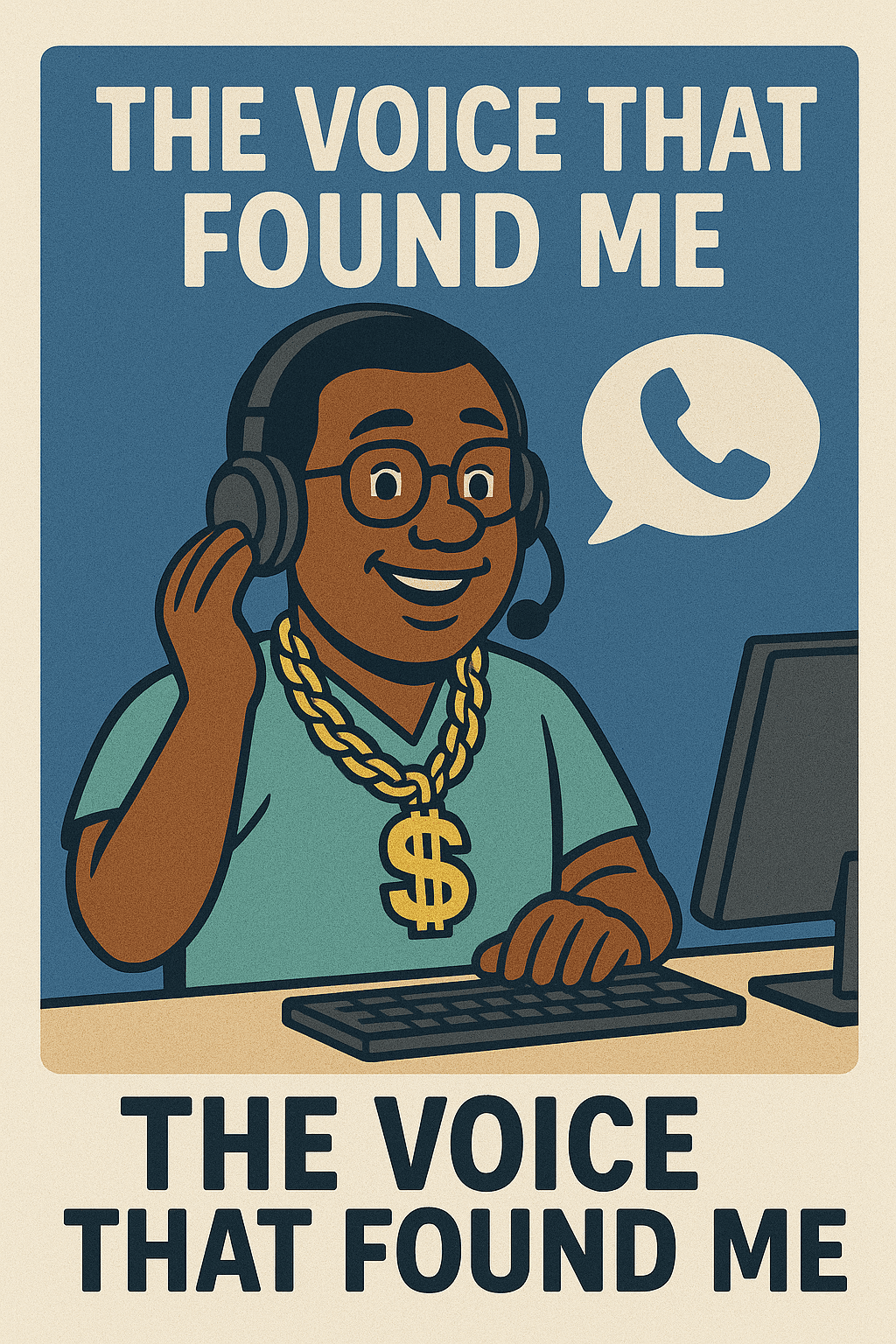
THE VOICE THAT FOUND ME
Before hip-hop ever reached me, the loudest voices in my life were all speaking different languages — and none of them felt like mine.
School talked in worksheets, test scores, and expectations that never matched the world I actually lived in. Church talked in scriptures and sermons, but most days it felt like they were preaching to people who already had their life together. Grown-ups talked in bills, stress, and “be realistic.”
I was surrounded by noise — sirens, arguments, lectures, corrections — but none of it sounded like truth I could hold on to. It felt like everybody had a script except me.
I didn’t need another lecture. I needed a translator for my life.
Growing up in the hood, nobody talked about emotional infrastructure. There were no counselors for kids who felt like destiny had been stolen from their zipcode. There were no mentors teaching ownership, no programs building confidence, no financial literacy teachers showing us how to multiply money or escape generational struggle.
People assumed that if you weren’t failing school, you were okay.
But many of us weren’t failing academically — we were failing spiritually, emotionally, socially, and economically… quietly.
Nobody was asking:
Who believes in you?
What do you dream about?
What is your voice becoming?
How do you handle disappointment without giving up?
How do you learn courage when nobody is modeling it?
And because nobody asked, millions of young people slipped through gaps that had absolutely nothing to do with intelligence.
I wasn’t lost because I didn’t care. I was lost because nobody taught me how to care for my own potential.
Somewhere between the frustration and the questions, something new slipped into my world — the beat.
Hip-hop didn’t knock politely. It kicked the door in.
It was the crisp, booming bass that cut through the hopelessness like a siren from another universe. The drums were loud, the rhythms were sharp, and the energy felt like somebody finally grabbed the mic and said, “Let me tell it from our side.”
It was brash. It was unfiltered. It was real.
In a world that celebrated safe stories — the suburbs, the good schools, the vacation pictures — hip-hop talked about our blocks, our struggles, our anger, our dreams, our mistakes.
For the first time, I wasn’t just hearing music. I was hearing myself.
Hip-hop wasn’t just rhythm — it was translation. It took confusing emotions and converted them into clarity: anger became meaning, confusion became identity, despair became honesty, survival became strategy, dreams became confession.
Where school told me to memorize, hip-hop told me to internalize.
Where society asked me to sit still, hip-hop told me to wake up.
Where adults said, “Be quiet,” hip-hop said, “Say it louder.”
For many of us, rap wasn’t rebellion — it was literacy. It gave young people a way to interpret their own reality when no traditional institution bothered to.
Hip-hop taught me that rhythm could preach. The flows were syncopated — off the usual beat — just like my life. Nothing lined up neatly, but somehow it all still landed on time.
Those verses weren’t written for textbooks. They were written for kids standing on the corner, or riding the bus, or lying awake at night wondering why life felt so unfair.
They talked about hunger, betrayal, losing friends, chasing dreams, dodging trouble, wanting more when the world told you to settle for less.
Hip-hop was naming my reality in a way nothing else did. When nobody else could explain my life, hip-hop became my commentary track.
Before the music, I thought a lot of my thoughts were mine alone — the anger, the questions, the feeling that the game was rigged. Then I heard MCs talking about the exact same things: growing up broke, watching people give up, seeing friends chase shortcuts, wondering if there was any honest way out.
Suddenly I wasn’t the only one asking, “Why does it feel like the rules are different for people from our side of town?”
Hip-hop showed me I wasn’t crazy — I was awake. Other people were carrying the same weight, the same hunger, the same fire. If people like me could think bigger, maybe I could too.
Hip-hop didn’t just describe the pain — it validated the desire to rise above it. That mattered more than most people understand.
When your world is full of silent contracts that say: be humble because you’re poor; don’t ask for more; don’t expect too much; stay where you belong… the permission to dream becomes oxygen.
Hip-hop gave us permission — not permission to escape, but permission to envision. Not permission to rebel, but permission to redefine. Dreaming became an act of resistance.
The church taught me to pray, but hip-hop taught me to pay attention. School gave me facts, but hip-hop gave me context. The streets gave me pressure, but hip-hop gave me language.
Where society said, “Be grateful,” hip-hop said, “Don’t apologize for wanting more.” Hip-hop didn’t save my soul. But it did save my sense that my life mattered.
And that was enough to make me search — for better answers, better models, and eventually for God in a way that honored my story instead of erasing it.
Hip-hop planted a seed that would later become the foundation of The Orderly Millionaire blueprint: before you build wealth, you must first reclaim your identity.
If you don’t see yourself as worthy of more, no system, opportunity, or instruction will matter — because you will sabotage the very thing you need most.
Hip-hop taught me that I wasn’t invisible, disposable, or destined to repeat the poverty I was born into. And that truth made the rest of the journey possible.
This chapter isn’t about music preferences. It’s about the first time I felt truly understood.
Hip-hop became the bridge between the world I was born into and the world I hoped existed somewhere else.