Audio Narration
Listen to Chapter 6
Coming soon — narration is being recorded.
(Placeholder only — we’ll connect the real audio file soon.)
Take Notes
What stood out to you?
Write your thoughts here. It’s private and saves on your device.
Write freely — saving stays on this device.
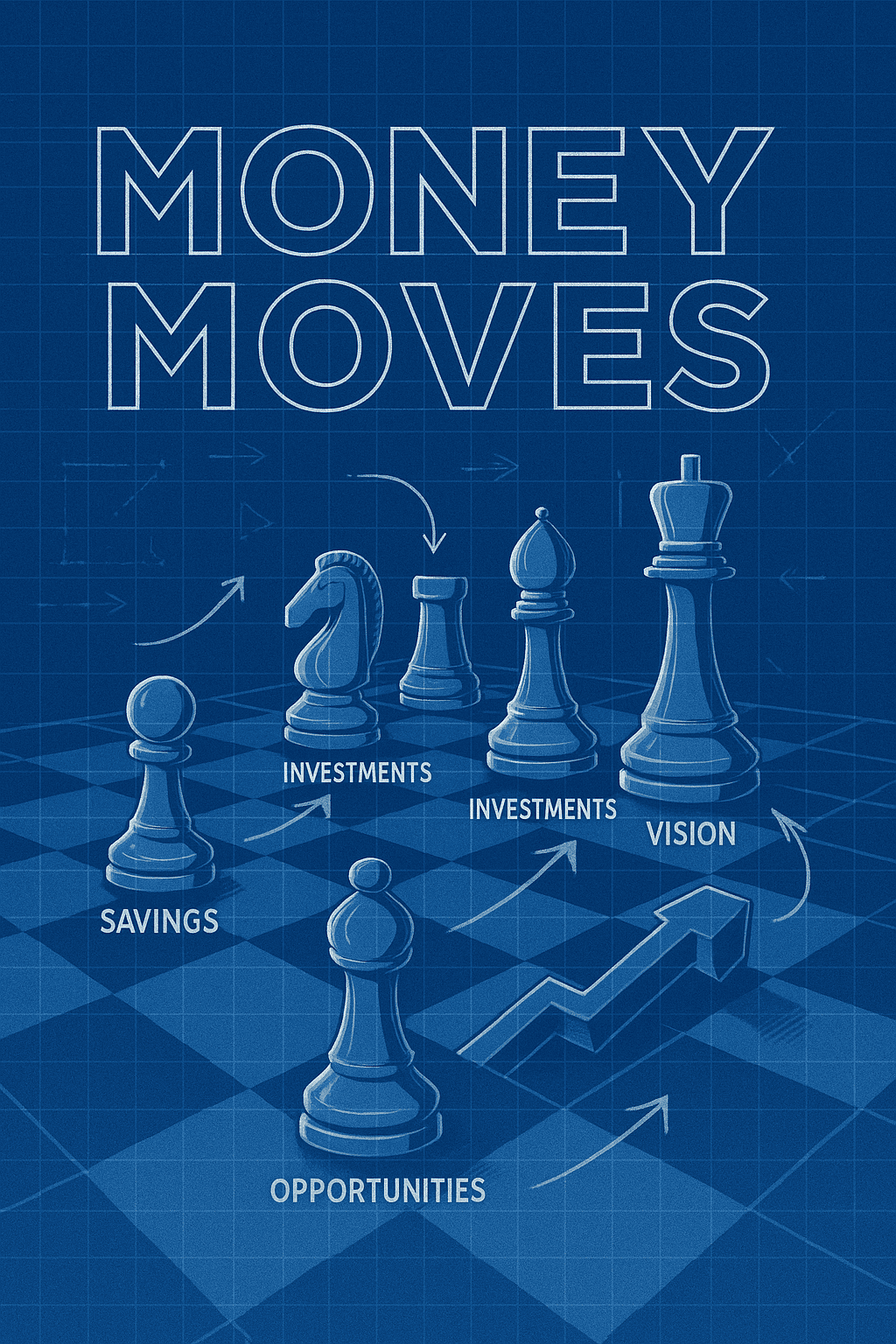
CHAPTER 6 — MONEY MOVES
How to Make Your Money Work Harder Than You Do
You’re not just reading about money — you’re training your brain to speak it.
This chapter is the doorway into your Money Moves Daily Learning. We built a 60-day system that unlocks one real money word per day — with a real-life example and a quick reflection that turns information into confidence.
Daily Word
One money term a day — no overwhelm.
Real-Life Example
Simple numbers that make it click.
Quick Reflection
A few lines that build judgment.
The First Financial Truth
I refuse to be broke in my mind.
Because financial struggle is not a character flaw — it is a vocabulary gap.
Here is the secret nobody teaches young people early enough:
There are no poor money managers — only people with a poor financial vocabulary.
Money moves according to language.
If you do not know the language, money will move through you or away from you — never toward you.
That is not because you are irresponsible. That is not because you lack discipline. That is not because you “don’t get it.”
It is because you cannot manage the things you cannot define. And you cannot master wealth if you do not speak the terms wealth responds to.
Every dollar moves.
Every dollar has a direction.
The question is:
Is your money working for you… or are you working for your money forever?
The Second Financial Truth
Money is not emotional — you are.
Money doesn’t get mad, confused, jealous, stressed, impulsive, or insecure. Money is not lazy. Money is not afraid. Money doesn’t panic.
Money simply follows rules.
Money simply obeys design.
Money simply responds to vocabulary.
If you want money to move toward you, you must learn to speak the language of:
- assets
- equity
- cash flow
- compound interest
- liquidity
- risk
- leverage
- credit
- tax strategy
- and real estate
The moment your vocabulary expands, your direction expands. The moment your understanding improves, your confidence improves. The moment your financial language sharpens, your money finally has a mission.
The 5 Realities of a Financial Vocabulary
- A dollar without a plan is a drifter. It will wander into fast food, impulse buys, debt, waste, and regret.
- A dollar with a job becomes an employee. If you give your dollars purpose — they will serve you.
- A dollar with leverage becomes a soldier. It multiplies without your sweat and returns as profit.
- A dollar with protection becomes permanent. Insurance, asset shields, tax planning — all protect your foundation.
- A dollar with direction becomes legacy. It survives you and feeds generations.
A Money Poem (Upgraded)
Money is just a mirror — it reflects how you think. If your thoughts stay small, your dollars shrink. If your habits stay reactive, your wallet stays thin. But discipline grows dollars — that’s where wealth begins. Money follows purpose — it listens to command. It doesn’t question intentions; it obeys your plan. Your bank account cannot grow first — your belief must grow before the purse. When mindset expands, resources expand too. Money moves differently when identity moves through you.
The Three Financial Identities
Every young adult eventually realizes:
You will either spend money emotionally, or allocate money intentionally.
There are only three financial paths:
- Money moving AWAY from you (impulse, confusion, no direction, no vocabulary)
- Money moving THROUGH you (paycheck to paycheck — no accumulation, no strategy)
- Money moving TO you and FOR you (investing, leverage, real estate, systems, strategy)
Financial identity shifts the moment you decide: “I will not be a drifter. I will be a designer.”
That mindset change is what separates:
- survival from stewardship
- spending from strategy
- hustle from ownership
- reactive living from financial authorship
Why Vocabulary Is Everything
Think about this for one second:
You cannot understand compound interest and still leave money in a checking account doing nothing.
You cannot understand asset vs liability and keep buying status purchases that drain your life.
You cannot understand tax strategy and still believe your refund is a blessing — instead of a sign that you gave the government a free loan.
You cannot understand risk and equity and enter a business partnership without clarity and exit plans.
You cannot understand leverage and still think you must save your way to wealth.
You cannot understand credit and still treat your score like an emotional toy.
Financial pain is not bad decision-making — it is vocabulary deficiency.
Once you can name the thing, you can protect the thing. Once you can define the thing, you can build the thing.
When vocabulary sharpens — money finally has direction.
The 60-Word Money Decoder
This is your vocabulary foundation. Once these words stop being “big words” and start being your words, money gets easier to control.
The Big Takeaway
You cannot chase money and win.
You must command money.
You do not need to be a financial genius. You only need:
- a vocabulary that creates confidence
- a system that gives every dollar a mission
- a mindset that treats wealth like a process, not pressure
- a blueprint that compounds decisions into legacy
Once your vocabulary evolves, your habits evolve, your systems evolve, and your money finally has a direction to move in — toward you, not away from you.
That is what this movement is teaching.
Not just entrepreneurship. Not just credit building. Not just investing.
Identity + Vocabulary = Wealth by Design
This is how teens become:
- calm thinkers
- purpose-driven spenders
- disciplined earners
- strategic builders
- and eventually multi-generational investors
⭐ Workshop Questions for Chapter 6
- Which word in the decoder did you understand differently today — and why?
- Where is money currently drifting in your life with no assignment?
- What dollar can you convert into an employee this month — savings, investment, debt reduction, etc.?
- What new vocabulary word do you want to master fully — not just recognize?
- How would your life feel different if every dollar had a mission instead of momentum?